Short-term rental management · Aosta Valley
Updated November 2026 · Written by the Vesta team
Vesta handles short-term rental management in the Aosta Valley for owners of mountain homes who want to rent to visitors without looking after the property themselves. We manage apartments in Cervinia and offer the same service in Valtournenche and Courmayeur. We take care of the listing, pricing, guests, cleaning, CIR and CIN codes, tourist tax and flat-rate tax; you receive your earnings every month.

Why the Aosta Valley
It is a small region with a very international market. According to the Region’s comparison of overnight stays by tourist area, in 2025 the Aosta Valley recorded about 4.5 million overnight stays and 1.6 million arrivals, and 43% of nights were spent by foreign guests.
Two areas carry more weight than the rest. The Mont Blanc area, with Courmayeur, passed 1.19 million overnight stays, more than a quarter of the regional total. The Matterhorn area, home to Breuil-Cervinia and Valtournenche, recorded about 865,000, and more than six nights in ten were spent by foreign guests: the highest share of the two. For owners this means listings in several languages and demand that does not depend on Italian holidays alone.
Where we operate
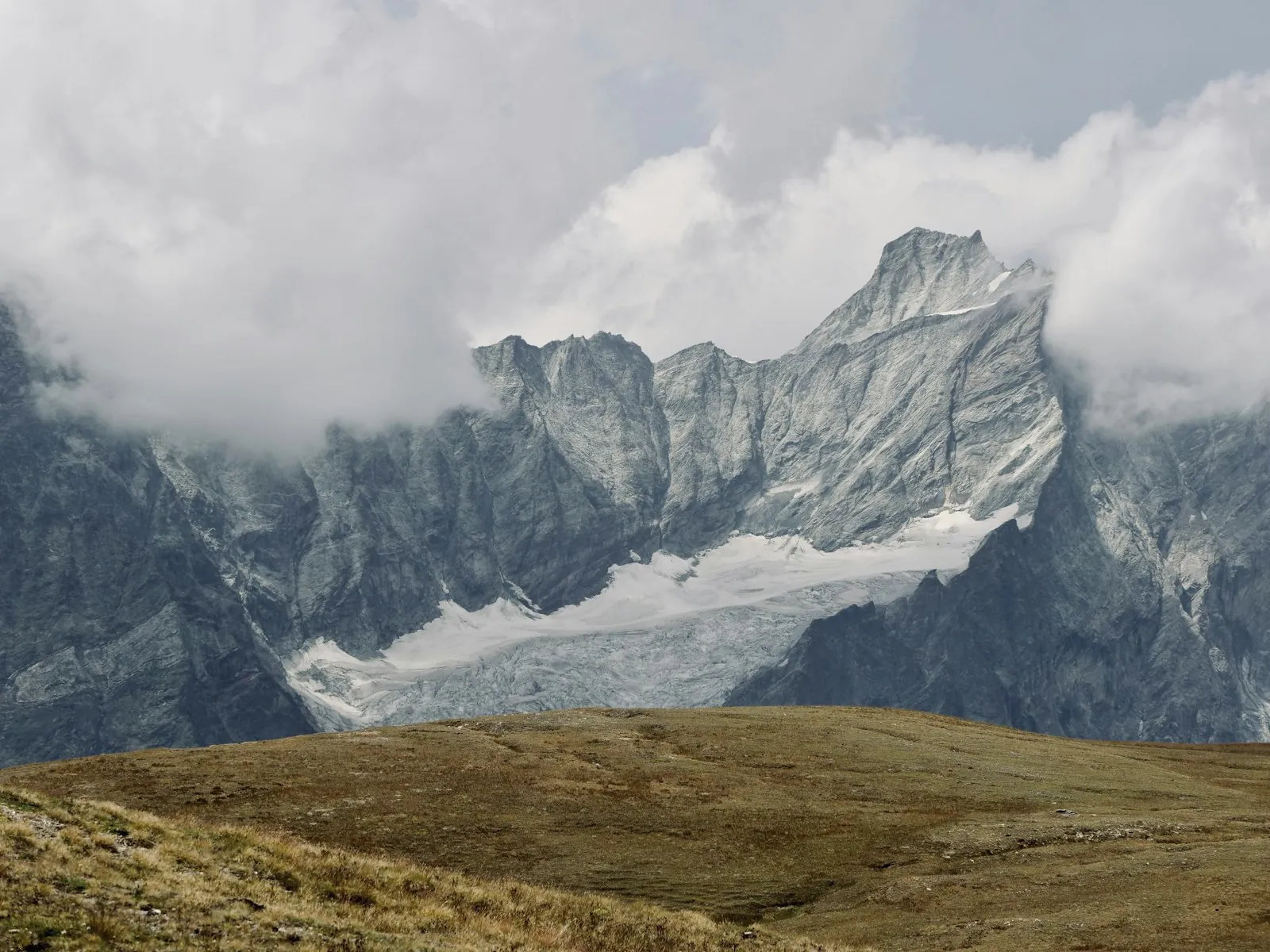
Today we manage properties in Cervinia, at the foot of the Matterhorn. In the same municipality we also cover Valtournenche, and on the Italian side of Mont Blanc we work in Courmayeur. Each has its own page with seasons, guests and local rules.
Is your home in another part of the region? Write to us anyway: we assess every request, looking at the area, access and available local staff.

Cervinia
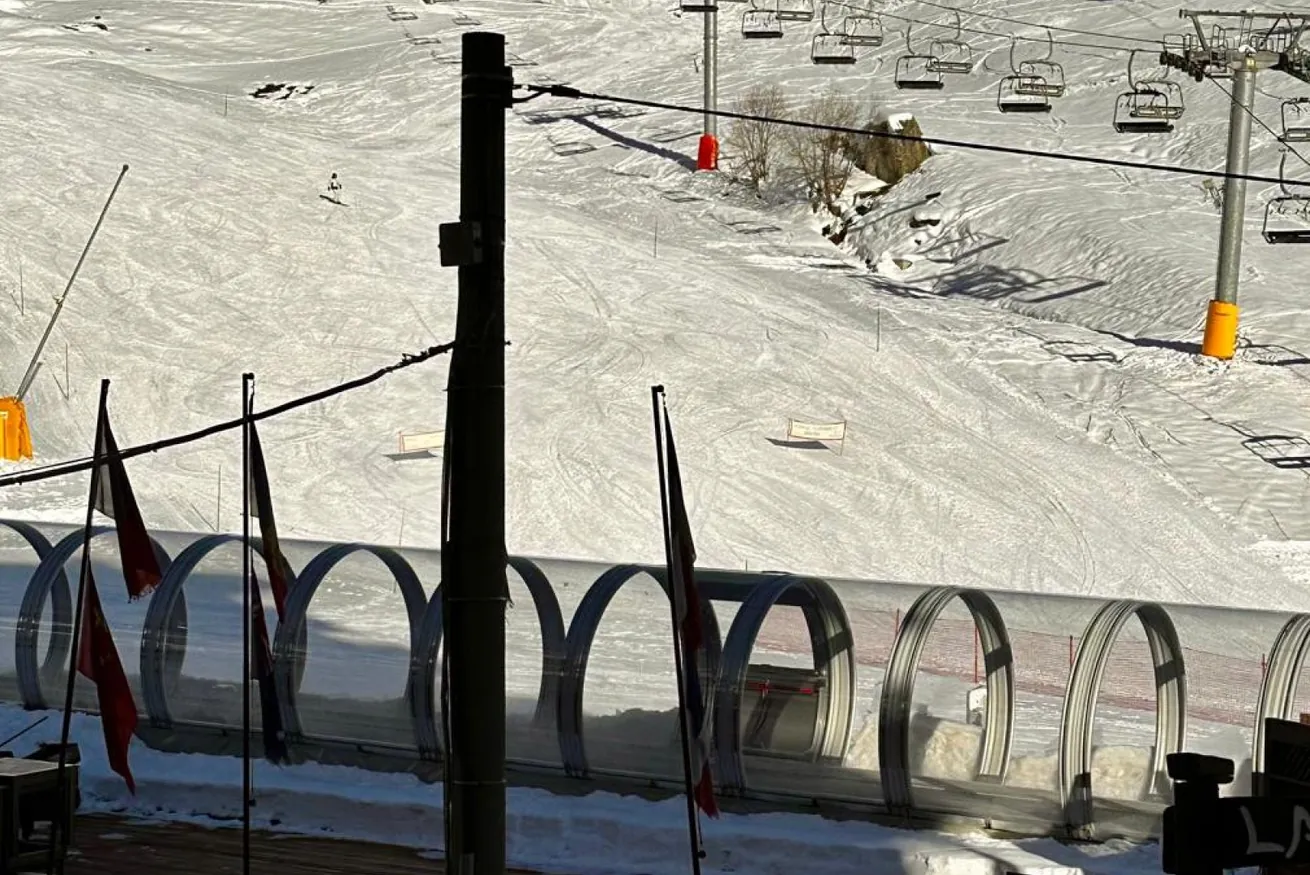
In Breuil-Cervinia we look after apartments close to the slopes and lifts. What we have learned from managing them is that the fixed Saturday-to-Saturday week sells less and less: guests want 3, 4 or 5 nights, and the calendar has to be built around that, with minimum stays that change from period to period.
In winter, being close to the lifts and having somewhere to park matter most; in summer the guests change and come for the mountains on foot.

Valtournenche
Valtournenche is the village of the Matterhorn valley, with its main centre at Pâquier and lifts linked to the Cervinia ski area: you can start skiing from the village. To rent well here, the listing has to explain where the home is in relation to the lifts and to Cervinia, and also describe the village and hamlets such as Cheneil, which can only be reached on foot or by a small cable lift.

Courmayeur
Courmayeur has two almost equal seasons: skiing in winter, and in summer the trails of Val Ferret and Val Veny and the cable car up Mont Blanc. A home here has to be ready for two different kinds of guest, with prices and minimum stays that change from December to August, and the weeks in between sold one by one.
Pricing and seasonality
In the mountains, earnings come from a few periods: Christmas and New Year, February, long weekends and, in summer, July and August. Outside these periods demand drops and the calendar has to be built week by week. Lift opening dates vary from area to area: you will find them on each location’s page.
That is why we use dynamic pricing, which rises when demand grows and comes down to fill the nights in quieter periods. If you are thinking of letting the whole winter to a single tenant, our guide on short-term or seasonal rentals in the mountains explains the differences.

Compliance
First the CIR, the regional code issued by the municipality, then the national CIN. After that come the ISTAT statement, guest registration with the police and the tourist tax.
With Vesta you do not have to deal with any of this: the CIR and CIN are registered to us, and if a requirement is missed or wrong, the penalty is ours.
| Requirement | What it involves | Who handles it |
|---|---|---|
| Regional CIR code | Identification code issued by the municipality after the declaration on the regional Locazioni turistiche platform; it must appear in every listing | Vesta, holder of the CIR |
| National CIN code | Requested on the Ministry of Tourism’s accommodation database once the CIR has been issued; it must be displayed outside the building and shown in listings | Vesta, holder of the CIN |
| ISTAT statement | Statement of arrivals and overnight stays to the Region, for statistical purposes | Vesta |
| Alloggiati Web | Guest registration with the police within 24 hours of arrival, on the State Police portal | Vesta |
| Tourist tax | Set by regional law 10/2023 and applied by municipalities; declared twice a year | Vesta |
Holiday lets in the Aosta Valley are governed by regional law 11/2023, which covers stays of up to 30 consecutive nights. According to the Region’s page on holiday lets, a CIR is still required beyond 30 days, but only to obtain the CIN. Steps and special cases are explained in our guide to the CIR in the Aosta Valley.
For the tourist tax, the Region sets minimum rates that each municipality can raise by up to 50%. The declaration is made by whoever lets the property: by 30 September for stays from January to June, and by 31 January for stays from July to December.
The Ministry of Tourism FAQ set out the national penalties: letting without a CIN can cost from €800 to €8,000, and from €500 to €5,000 per unit if the code is not displayed or missing from listings. Working fire extinguishers and gas and carbon monoxide detectors are also required (detectors can be omitted only if there is no gas and no risk of carbon monoxide in the home): without them, the penalty ranges from €600 to €6,000 for each violation.
From 2026 the short-term rental tax regime applies to no more than two apartments per tax year: from the third onwards the activity is presumed to be a business. If you own more than one home, in the Aosta Valley or elsewhere, we set up the management together before the season.
Tax management
We act as withholding agent: we withhold and pay the flat-rate tax, calculated on your share after commission and costs, not on the total paid by guests. Where the rules allow, part of the expenses is treated as a reimbursement of costs, so it does not count towards taxable income.
You will find the details on the pages for Cervinia, Valtournenche and Courmayeur.
About us
Vesta is a short-term rental management company working in several regions, from the mountains to the sea. As a property management company we look after every home with a team of 9 people working remotely; in the Aosta Valley we work with local staff for check-in, cleaning and maintenance.
Some owners look for us as a holiday rental agency in the Aosta Valley, others talk about Airbnb management: in practice we handle everything a home needs to earn, from the listing to the last guest of the season.
FAQ
The questions mountain home owners ask us most, from regional codes to tax. If yours is not here, write to us: we reply within 48 hours.
We manage apartments in Cervinia and also offer the service in Valtournenche and Courmayeur. If your home is elsewhere in the region, write to us: we assess every request.
It is the regional identification code that the municipality issues for every property let to visitors, after the declaration on the Locazioni turistiche platform. It must appear in listings and is needed to request the national CIN: the steps are in our CIR guide.
Yes, but only to obtain the CIN. The regional law on holiday lets covers stays of up to 30 nights; for longer lets the Region requires the CIR solely for the purpose of the CIN.
Vesta. Both codes are registered to us, and we also handle the ISTAT statement, guest registration with the police and the tourist tax. If a requirement is missed or wrong, the penalty is ours.
It is set by regional law 10/2023 and applied by municipalities, which can raise the regional minimum rates by up to 50%. It is declared twice a year, by 30 September and by 31 January. With Vesta we handle it, from the first declaration to the following deadlines.
Yes. We act as withholding agent: we pay the flat-rate tax calculated on your net share, after commission and costs. Where the rules allow, part of the expenses is treated as a reimbursement and is not counted as taxable income.
Two: from 2026 the short-term rental tax regime applies to no more than two apartments per tax year, and from the third onwards the activity is presumed to be a business. If you have more, we discuss it before we start.
It depends on the home and its location. Short-term rentals earn more in peak weeks but need more management; a seasonal let, one tenant for the winter, means fewer worries and lower income. The two can also be combined: seasonal in winter and short-term in summer. We cover this in a dedicated guide.
Yes. You block the dates yourself from the owner portal, without asking anyone. Bear in mind that these are also the most requested weeks: we decide together which ones to keep for you and which to rent.
Yes, that is the most common case. The team looks after the home remotely and local staff handle check-in, cleaning and maintenance on site.
It depends on the home and the services it needs. Our commission is not published on the website: we share it after seeing the property. When comparing managers, check what amount the percentage is calculated on and what it includes.
From the owner portal, in your browser: bookings, income, free dates and how the home is performing, in real time. Earnings are paid out monthly.

Free assessment
It depends on the area, type and condition of the property and on the periods when it is available: that is why we prepare a personalised estimate. Request a free, no-obligation assessment and we will reply within 48 hours, or write to us on WhatsApp at +39 351 740 7898.
Other locations
Beyond the Aosta Valley we look after homes by the sea, in Cortina, in the city and on Lake Como. Each location has its own page, with local seasons and rules.
Thanks! We will get back to you as soon as possible, usually within 48 hours.